



PE PIPE
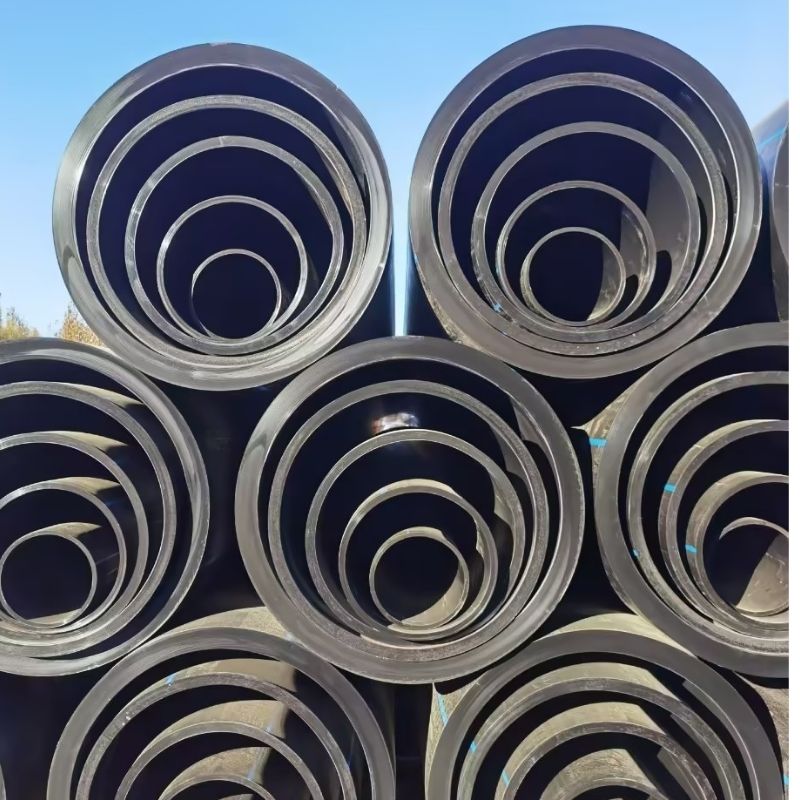
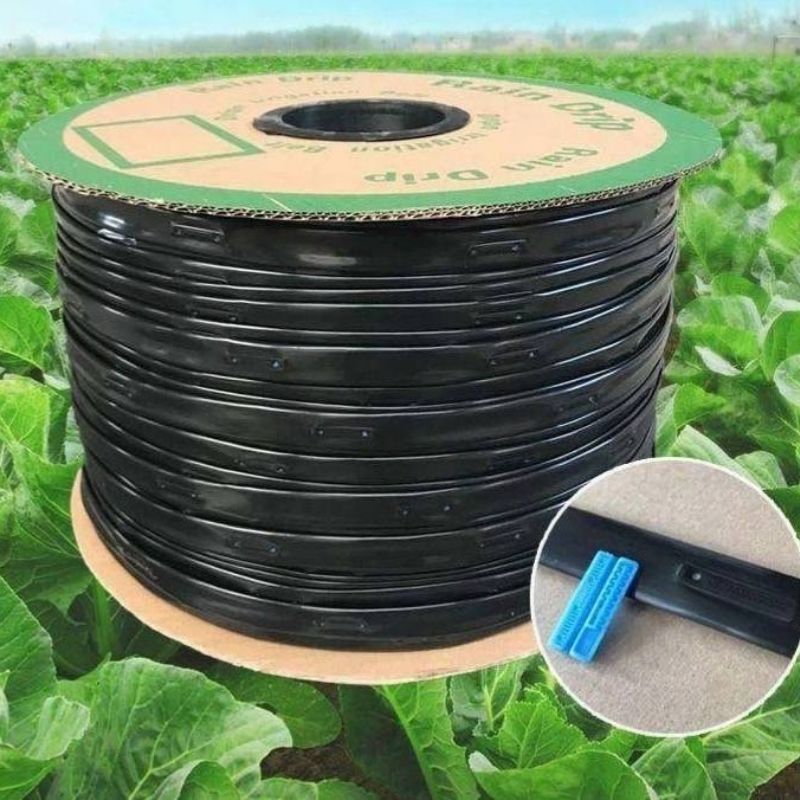
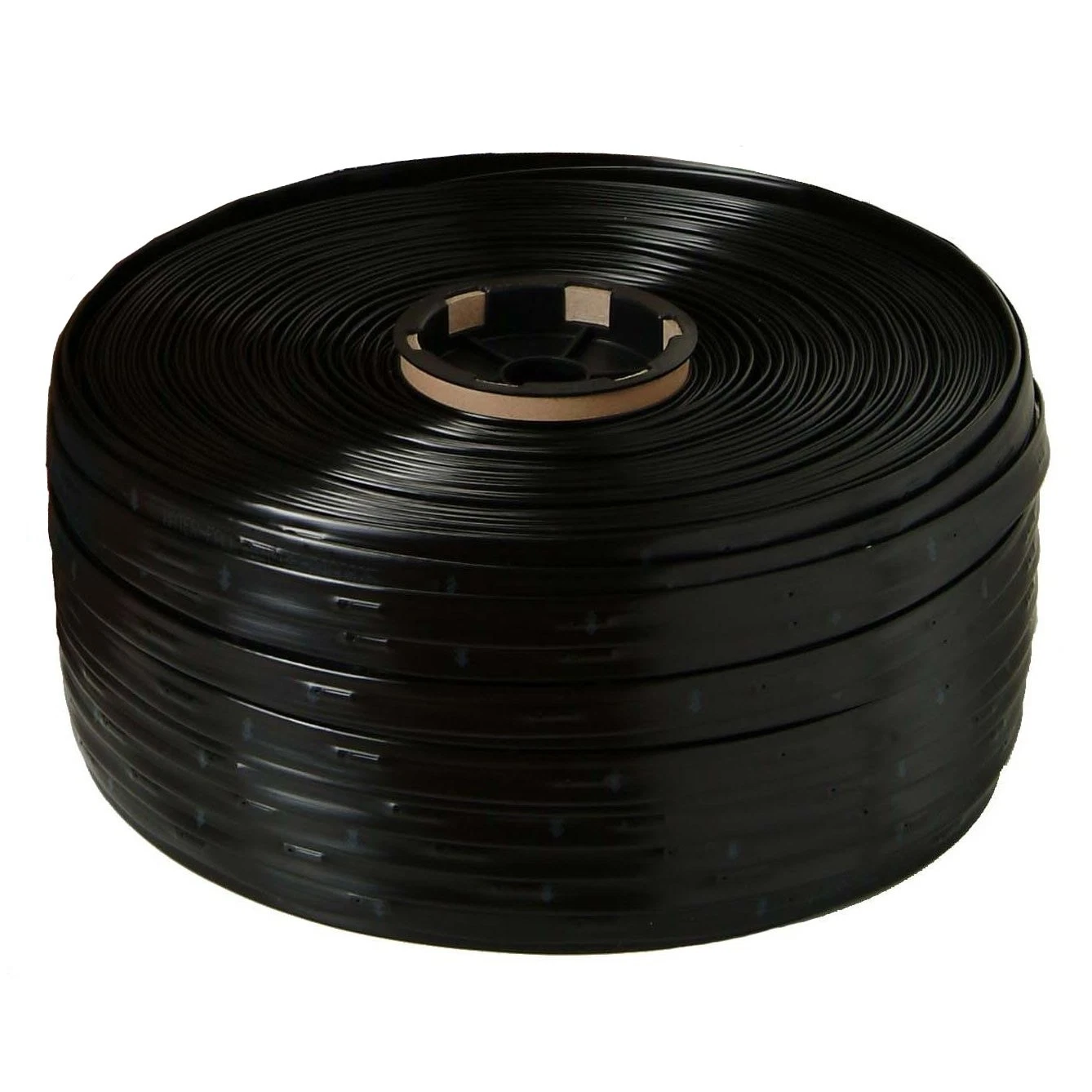
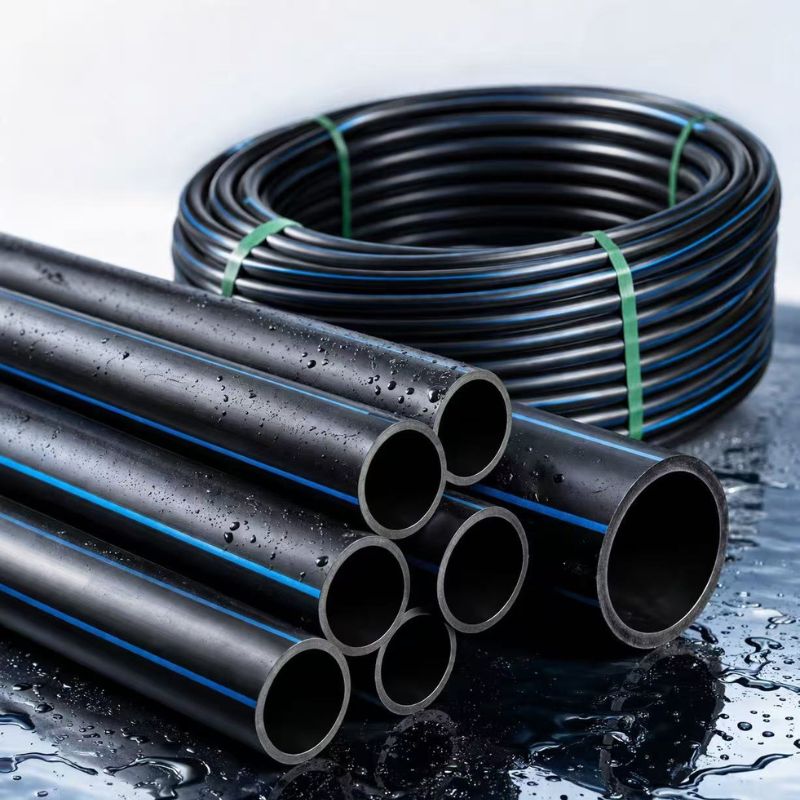
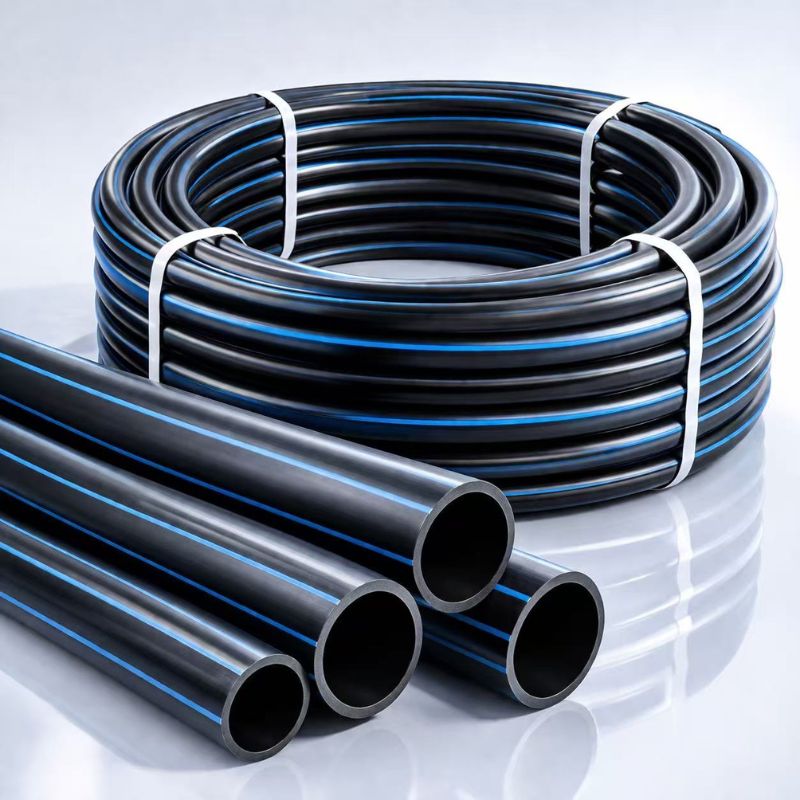
Anti-Corrosion water supply pipe
Safe drinking water begins with choosing high-quality HDPE water supply pipes.
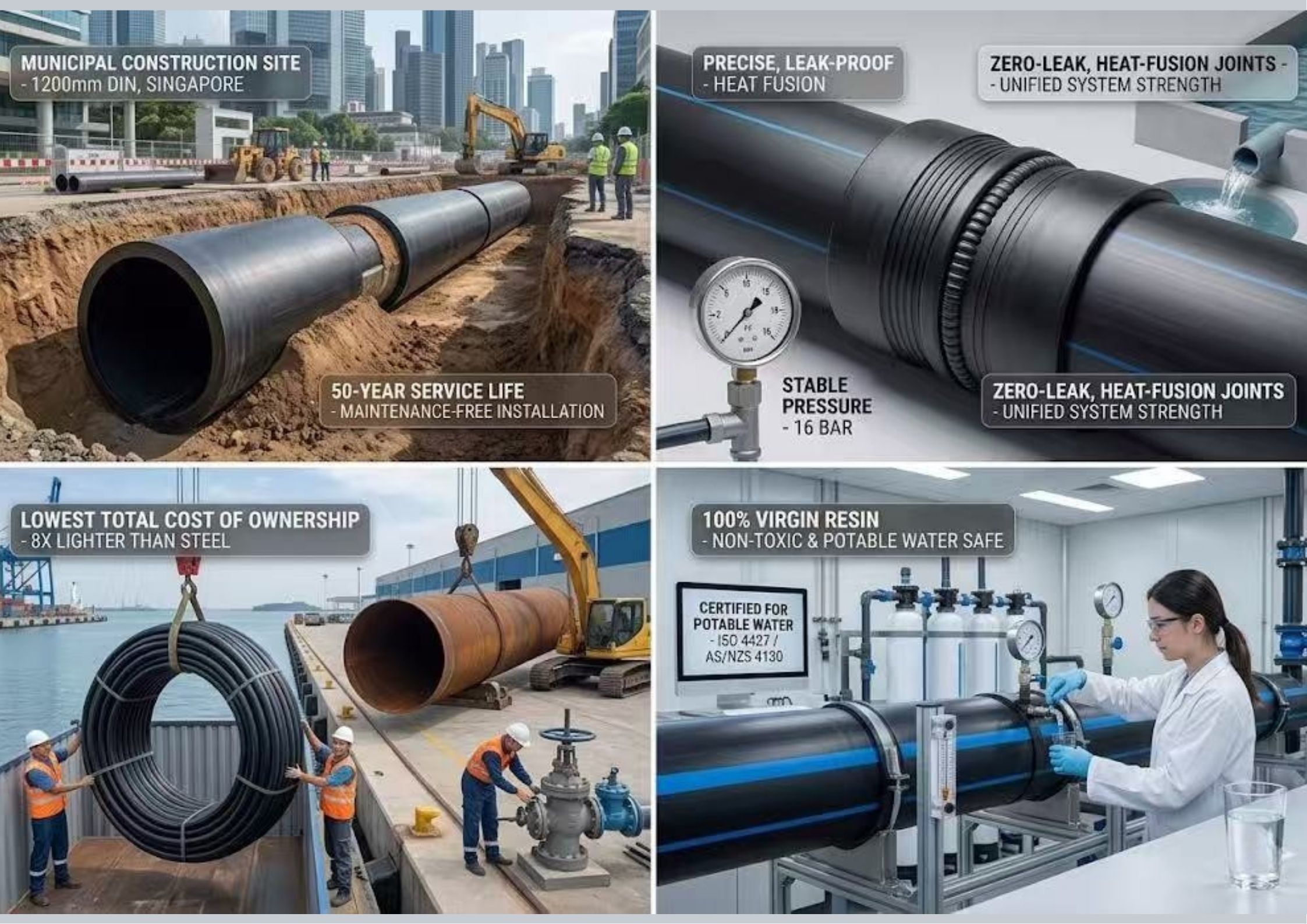
Our PE (high-density polyethylene) water supply pipes are produced using 100% brand-new PE100 grade raw materials. As the
preferred pipe material for modern municipal water supply, rural drinking water projects and agricultural irrigation, it boasts excellent
flexibility.
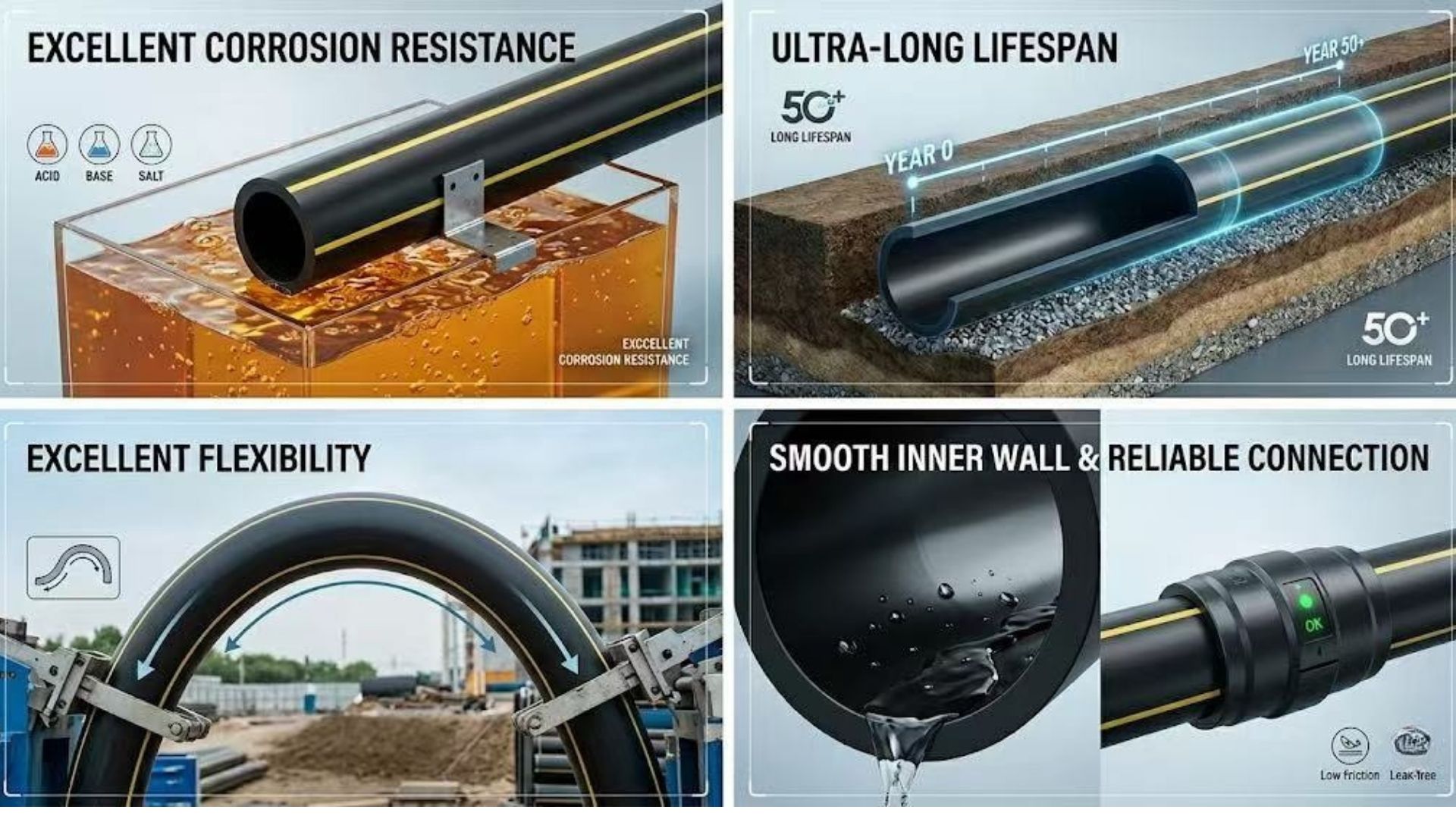
Why choose our PE water supply pipes?
• 100% Hygienic and Non-Toxic: The material is environmentally friendly, does not produce heavy metal ions, does not form scale,
and does not breed bacteria, ensuring that drinking water meets national hygiene standards.
• Outstanding Corrosion Resistance: Except for a few strong oxidants, it can withstand the erosion of various chemical media. No
anti-corrosion coating is required. It will not rot when used underground.
• Excellent Flexibility and Impact Resistance: The elongation rate of PE pipe fracture exceeds 500%, which can effectively resist
foundation settlement and earthquake impact. The pipe body can be bent, reducing the usage of pipe fittings.
• Smooth Inner Wall, High Flow Rate: The friction coefficient is extremely low, the water flow resistance is small, and it is more than
30% higher than that of metal pipes of the same diameter, reducing energy consumption.
• Reliable Connection, Zero Leakage: It is connected by hot-melt or electric fusion connection. The joint strength is higher than that of the pipe body itself, forming an integrated anti-leakage system.
Technical Specifications and Specifications
| Parameter | Details |
| Raw material | PE100/PE80 |
| Executive standard | GB/T13663/iso 4427/EN12201 |
| DN | 20MM-1200MM(Custpmized) |
| PN | 0.6MPa,0.8MPa, 1.0MPa, 1.25MPa, 1.6MPa |
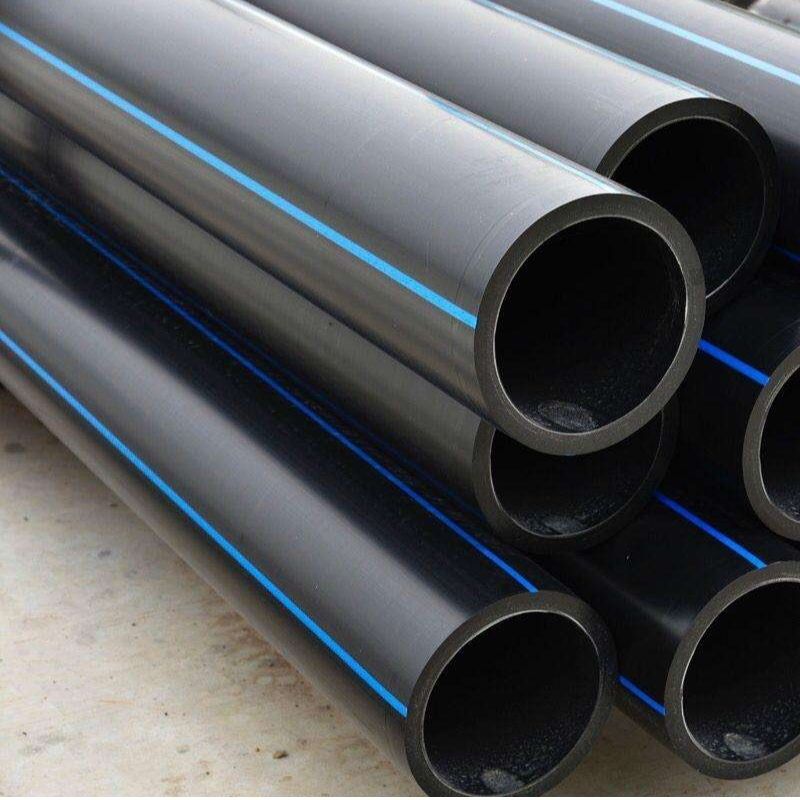
| Color | Blue , Black, or customized |
| Working temperature | -40°C to 40°C |
| Joint way | Hot melt welding, hot melt butt joint, hot melt connection, flange connection |
Product Details
Raw materials determine quality
We strictly select raw materials from top manufacturers such as Borealis or Sinopec/CSCEC, without adding any recycled materials.
This ensures that each pipe can withstand high-intensity internal pressure tests.
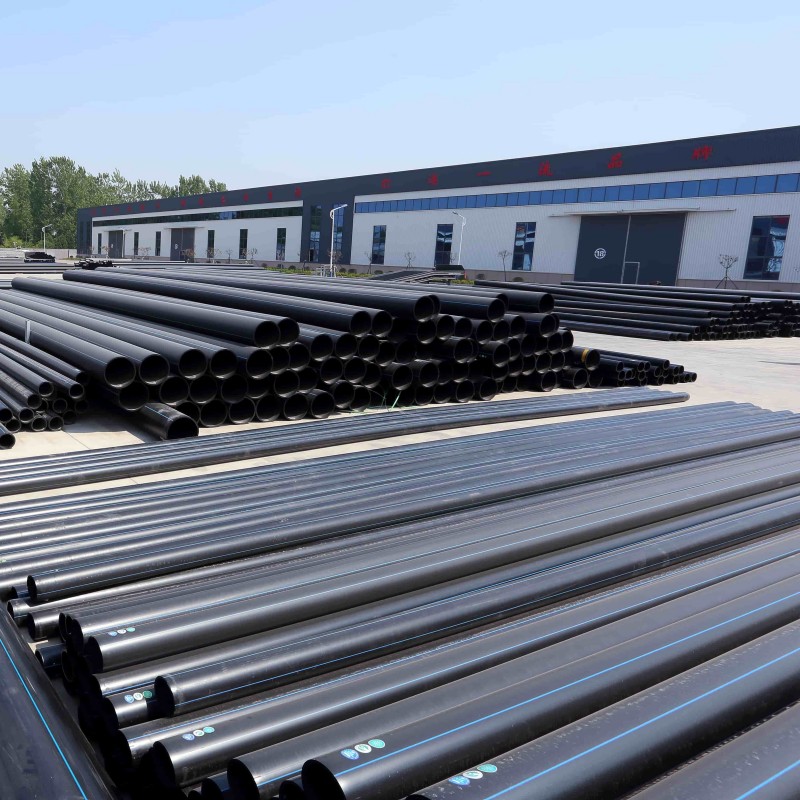
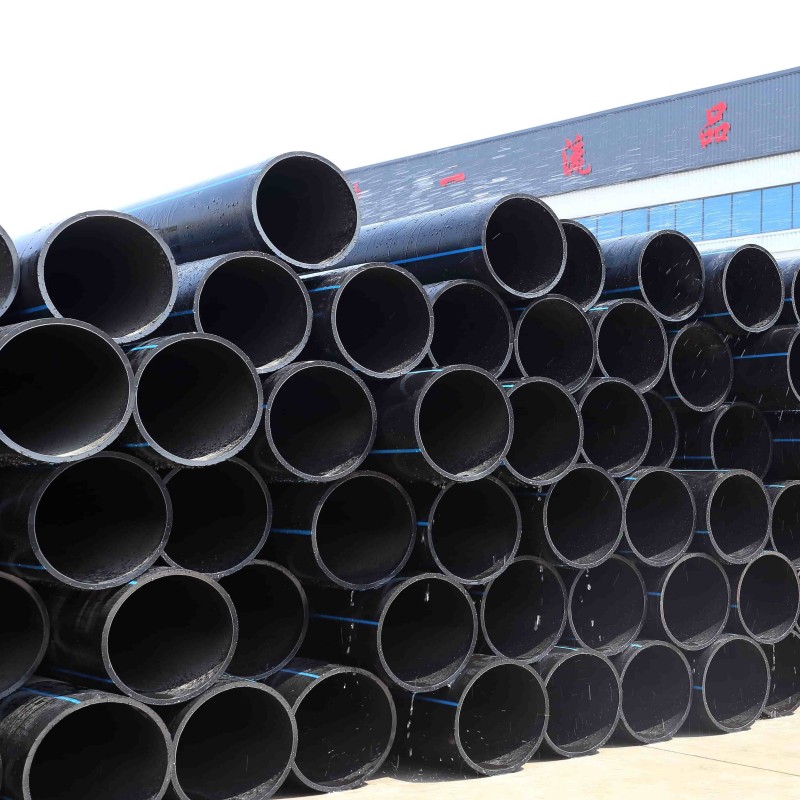
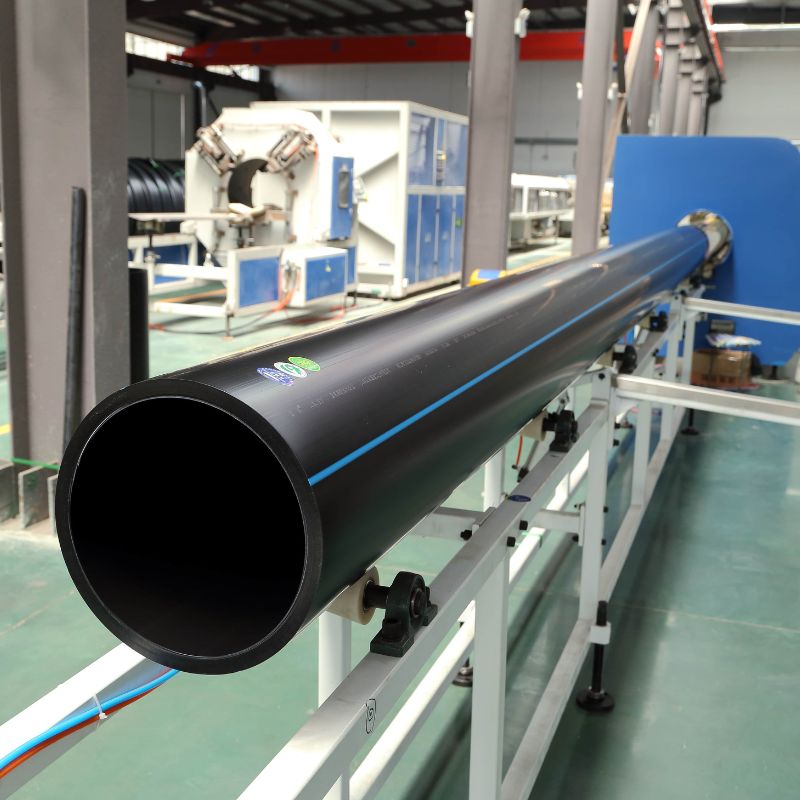
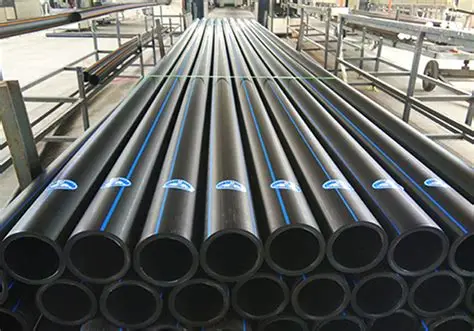
Precise extrusion process
Using an automated production line, the pipe wall thickness is uniform, and the inner and outer walls are smooth and flat. The surface of the pipe is clearly printed with specifications, pressure grades, compliance standards, and production date, ensuring traceability of
the chain.
Application fields
• Urban water supply network: Safe, hygienic, and with high construction efficiency.
• Rural drinking water safety project: Suitable for complex terrain and resistant to geological settlement.
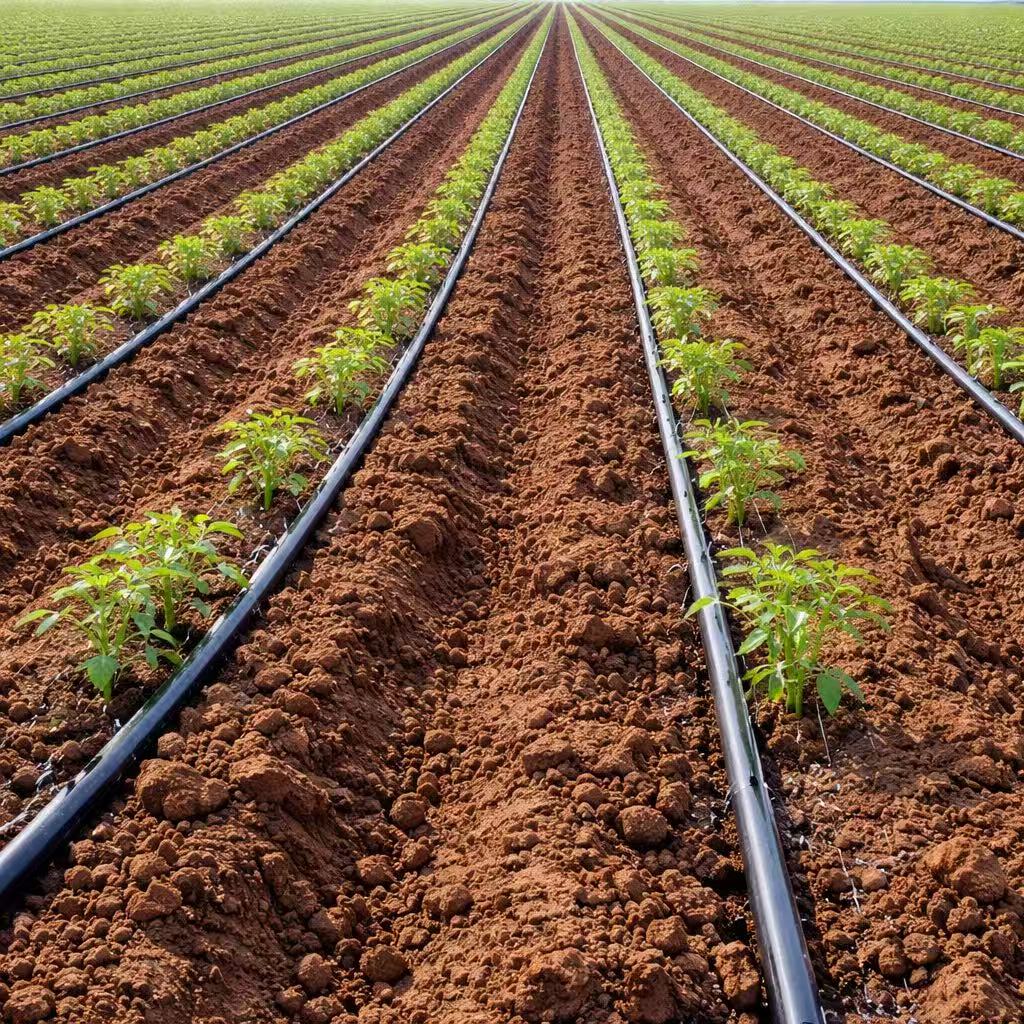
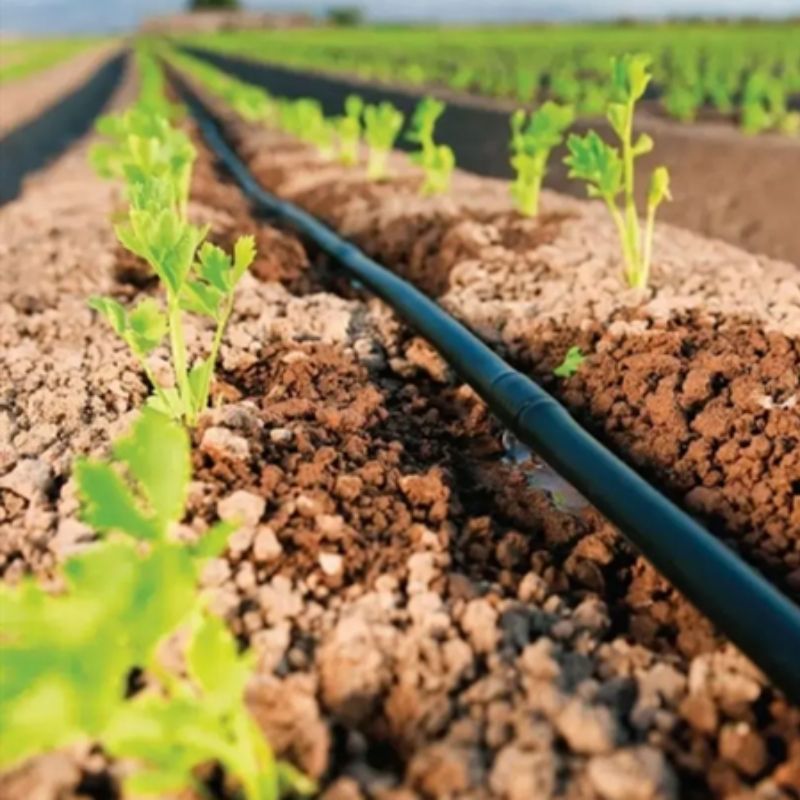
• Agricultural irrigation and landscape spraying: Resistant to ultraviolet rays, aging-resistant, and cost-effective.
• Industrial chemical fluid transportation: Outstanding resistance to chemical corrosion.
• Non-digging engineering: Suitable for pipe pulling construction, with minimal environmental damage.
Installation and installation guide
1. Pipe cutting: Ensure the cut is flat and perpendicular to the pipe axis.
2. Surface cleaning: Wipe off dust and moisture from the welding area.
3. Hot melt welding: Set the heating time and temperature according to the pipe diameter (usually 200°C - 230°C).
4. Cooling jointing: Maintain natural cooling and strictly prohibit moving or applying external force during the cooling process.
FAQ
Q: How long is the service life of PE water supply pipes?
A: Under standard temperature and pressure (20°C, PN), our PE100 pipe materials are designed to have a service life of over 50 years.
Q: Can your pipes be used for hot water transportation?
A: PE water supply pipes are mainly used for cold water transportation (<40°C). If hot water transportation is required, it is recommended to check our PE-RT or PPR products.
Q: How to ensure the quality of purchased PE pipes?
A: Qualified PE pipes should have complete test reports, smooth pipe walls without bubbles, uniform cut color, and no odor.
You Might Also Like